

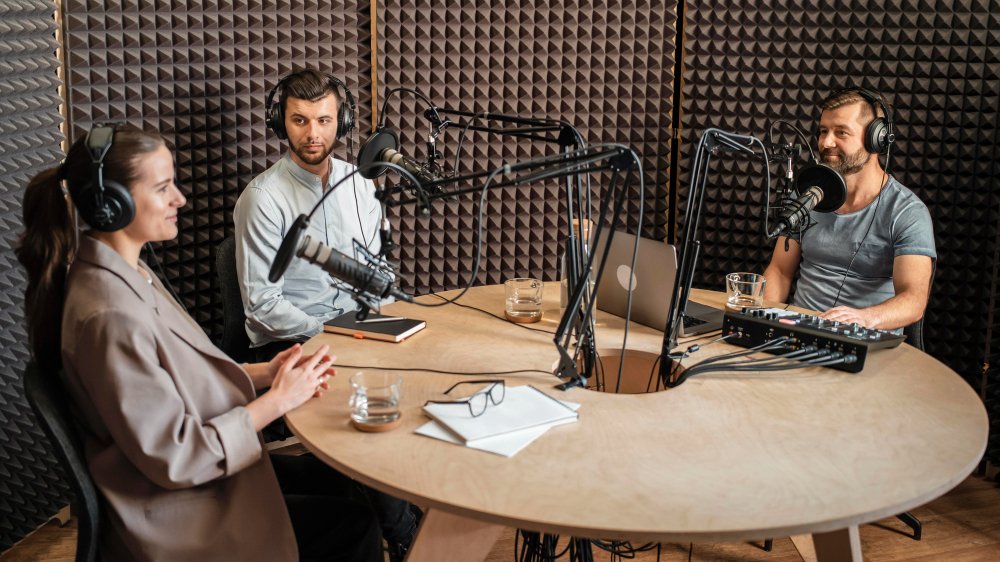
How to create consistent, high-quality episodes without losing focus on the business that matters.
Running a company is already a full-time job. Adding a podcast on top of it?
For most founders, that feels impossible.
But here’s the truth I’ve seen across four decades of working with leaders, creators, and brands:
It’s never the podcast that overwhelms you… it’s the lack of a workflow.
When your process is scattered, your content becomes inconsistent.
When your workflow is predictable, your message becomes powerful.
Below is the ultimate podcast workflow built specifically for founders who want to build authority without sacrificing time, clarity, or sanity.
1. Start With a Weekly Content Map, Not an Idea List
Most founders let inspiration dictate episodes. That’s why consistency takes a hit.
Instead, build a weekly content map — a simple document that answers three questions:
- What does my audience need this week?
- What expertise can I deliver quickly?
- What business priority does this support?
Your map becomes the foundation for the year. It eliminates guesswork and protects your energy.
SEO Tip: Including phrases like podcast content planning, podcast strategy for founders, and weekly podcast workflow helps your article rank for strategic searches.
2. Use the 20-Minute Founder Script Formula
A founder doesn’t have hours to script episodes — nor should they.
Use this simple 3-part structure:
A. Hook (1 minute)
A story, a question, or a bold statement that grabs attention.
B. Insight (12–15 minutes)
Share frameworks, experiences, or lessons directly tied to your expertise.
C. Action (2 minutes)
Offer a next step: a mindset shift, an exercise, or a question to reflect on.
This structure keeps episodes tight, valuable, and repeatable — the three traits listeners love.
3. Record in Batches, Not Sprints
The biggest difference between overwhelmed founders and consistent ones?
Batch recording.
Set aside one day each month.
Record 4–6 episodes.
Save them as a content bank.
This single shift creates:
- More production efficiency
- Less creative fatigue
- Zero “I don’t have time today” pressure
Batching is the secret to long-term podcast survival.
4. Keep Your Tech Lean and Reliable
Founders don’t need fancy studios. They need dependable, simple equipment that removes friction.
A clean process looks like this:
- USB microphone that doesn’t need tuning
- Quiet room
- Soft surfaces to reduce echo
- One-button recording software (like Riverside or Descript)
Your workflow should never depend on complicated gear.
Remember: Smooth systems keep podcasts alive — not expensive gadgets.
5. Edit With the 90/10 Rule
Founders shouldn’t spend 4 hours polishing a 20-minute episode.
Follow the 90/10 rule:
Spend 90% of your time on content, and only 10% on editing.
Your editor (or editing tool) should handle:
- Noise reduction
- Minor cleanups
- Adding intro/outro
- Mixing levels
Your job is simply to deliver the message.
This keeps your workflow quick, focused, and sustainable.
6. Turn Every Episode Into 6–10 Pieces of Content
A founder’s podcast is not just audio — it’s a content engine.
Repurpose each episode into:
- 1 LinkedIn post
- 2 short videos
- 1 carousel
- 1 newsletter snippet
- 1 quote graphic
This makes your podcast the most efficient marketing asset you own.
This is also excellent for SEO — the more search-indexed content around your episode, the higher the long-term visibility.
7. Set a Syndication Routine That Runs on Autopilot
Once your episode is edited and ready, follow a fixed weekly release routine:
- Upload to your host
- Publish show notes
- Add keywords like podcast workflow, founder podcasting, content repurposing
- Share across 2–3 platforms
- Send trigger posts to the team or community
A consistent release routine trains both platforms and your audience to expect content.
8. Measure What Matters — Not Vanity Metrics
Busy founders shouldn’t obsess over plays.
Instead track:
- Listener retention
- Qualified inquiries
- Backward referrals (“Loved your podcast on ___”)
- Episode-to-lead conversion
- Topic performance over time
When you measure what matters, your podcast becomes a business tool — not a time sink.
Final Thoughts: A Podcast Works When the Workflow Works
A great founder podcast isn’t built on creativity.
It’s built on systems.
When you have:
✔ A content map
✔ A repeatable script formula
✔ Batch recording
✔ Light editing
✔ Repurposing
✔ A weekly release routine
…your podcast becomes effortless, impactful, and deeply aligned with your brand.
Because the truth is simple:
Founders don’t need more time to podcast — they just need a better workflow.